
- An estimated 3 million adults in the United States suffer from Inflammatory Bowel Disease (IBD).
- The health of your gut and the gut microbiota has been shown to affect inflammation, which is the key feature of IBD.
- Dysbiosis has been observed in patients with IBD as compared to healthy individuals.
- The Anti-inflammatory Diet for IBD (IBD-AID), which includes the use of more prebiotic and probiotic foods to restore the healthy levels of gut microbiota, has been researched and studied as an adjunct therapy for IBD treatment.
Inflammatory Bowel Disease (IBD) is a chronic inflammatory disease of the gut and bowels. The 2 conditions that are commonly associated with IBD are Crohn’s disease (CD) and ulcerative colitis (UC). The differences between CD and UC lie in the following [1]:
- Location: inflammation can affect any part of the gastrointestinal (GI) tract for CD; for UC, it is limited to the colon and the rectum - Type: damaged tissues appear in patches in CD, whereas the damaged areas are often continuous in UC - Extend: the extend of inflammation can affect multiple layers of the GI tract in CD, while inflammation is only often present in the innermost layer of the colon in UC.
An estimated 3 million adults from the United States (U.S.) suffer from IBD [2], with many more children under the age of 18 years old being diagnosed as well [3]. Common symptoms of IBD may resemble irritable bowel syndrome (IBS), but they are not the same condition. Some symptoms include abdominal pain, weight loss, and rectal bleeding.
The health of your gut and the gut microbiota (also called gut microbiome) has been shown to affect inflammation, which is the key feature of IBD [4]. Fiber intake may also have certain roles in the cause of IBD, which includes (but not limited to) its effects as a prebiotic for the gut microbiota.
World IBD Day falls on 19 May every year [5]. In conjunction with this day, find out how the health of your gut (including your gut microbiota) is related and associated with this autoimmune and inflammatory disease of the bowels!
The human digestive system and health is greatly affected by the microorganisms harbored within the gut, which includes bacteria, virus, and fungi species. This is termed as the gut microbiota, with the number of bacterial cells estimated to be more than 10 times the number of human cells [6]. Its composition is unique to everyone, as several factors such as environmental and lifestyle contribute to the uniqueness of the gut microbiota composition [7].
Indications of an unhealthy digestive system can range from local (i.e., gut-related) such as digestive issues, to more systemic-related problems like skin health, mood swings, and even depression [8], and many of these effects may be contributed by the gut microbiota [9]. A change in the bacterial species and environment could happen because of drugs (e.g., antibiotics), toxins, and pathogens. This is called ‘dysbiosis’ [10].
There have been several published reports that studied the effects of the gut microbiota on IBD, mainly reflected by the gut microbiota’s effect on reducing inflammation.
Dysbiosis has been observed in patients with IBD as compared to healthy individuals [11]. As a healthy gut microbiota has been associated with anti-inflammatory effects on the gut, dysbiosis could have pro-inflammatory effects on the gut, leading to symptoms of IBD. An increase in the number of ‘bad’ bacteria in the gut also affects the gut in other ways, such as changing the permeability of the intestine walls [11]. This effect has also been shown in animal studies, where rats with gut microbiota changes induced by using antibiotics were associated with recurrent gut inflammation [12].
The gut microbiota also produces short-chain fatty acids (SCFAs) through the fermentation of prebiotics such as dietary fiber [9]. The concentrations of these SCFAs were also found to be lower in IBD patients, which may also play a part in inducing inflammation, leading to IBD and its respective symptoms [11].
Dietary changes that target gut microbiota may help to alleviate IBD symptoms [13]. The Anti-inflammatory Diet for IBD (IBD-AID) has been researched and studied as an adjunct therapy for IBD treatment [14]. The IBD-AID includes the use of more prebiotic and probiotic foods to restore the healthy levels of gut microbiota. According to the study, a 61.3% of patients on IBD-AID for 8 weeks reported a significant decrease in IBD symptoms [14]. IBD-AID also emphasize on the importance of using soluble fiber, which also promotes benefits such as SCFAs production by the gut microbiota, as mentioned above as well [15].
Prebiotics are substrates that are used and broken down by the gut microbiota to form metabolites such as SCFAs. Different forms of prebiotics include [16]:
- Resistant starches such as Fibrosol Prebiotic - Frutans - Galacto-oligosaccharides - Pectin
Inflammatory Bowel Disease (IBD) is a chronic inflammatory disease that can affect any part of the gastrointestinal system, depending on the type of IBD. The gut microbiota and alterations of the composition of it has been associated with IBD, as dysbiosis has been shown to be observed in patients with IBD as compared to healthy individuals. Dietary changes such as increasing the usage of prebiotic and soluble fiber may be useful in alleviating the symptoms of IBD.
This article is written in conjunction with World IBD Day, which falls on 19 May every year.
 6 Tips on Increasing Dietary Fiber Intake
 Prebiotic: Gut Microbiota, Gut Health, and Beyond

- It is found that about 11.2% of people worldwide suffer from Irritable Bowel Syndrome (IBS).
- IBS is generally divided into 3 types, depending on the clinical presentation.
- One possible cause or risk factor of IBS could be the gut-brain axis interaction, which is also called functional gastrointestinal (GI) disorder, affecting the sensitivity of the gut.
- International guidelines have strongly recommended the use ofsoluble fiber (and not insoluble fiber) as an effective treatment for the global symptoms of IBS.
Irritable bowel syndrome, or IBS for short, is also a condition known as ‘sensitive gut’. It is a relatively common long-term digestive system condition. It is found that about 11.2% of people worldwide suffer from IBS [1], although the prevalence may be different across different countries, with other studies citing a prevalence of about 4.4% to 4.8% in the United States, Canada and United Kingdom [2].
It is characterized with frequent abdominal pain coupled with symptoms of constipation and/or diarrhea. What are the other symptoms one with IBS will usually face, and how is it being managed and treated? Read on to find out more.
IBS is generally divided into 3 types [3]:
- IBS-D (diarrhea) - IBS-C (constipation) - IBS-M (mixed), or also known as IBS-A (alternating)
Although there are no tests for IBS, doctors may do blood tests to rule out other possible conditions causing similar symptoms as IBS, including celiac diseases or inflammatory bowel diseases [4]. Your doctor may use a certain set of criteria called Rome IV diagnostic criteria, which evaluates based on the pattern and frequency of abdominal pain and its association with bowel movement, as well as whether there is a change in the frequency and consistency of your stools [5].
The doctors will then categorization based on the predominant stool consistency, based on the Bristol Stool Form Scale (BSFS) and the Rome IV criteria.
Although we do not know the actual cause of why IBS occurs, there have been different postulations as to why IBS develops in some people. One possible issue could be with the gut-brain axis interaction, which is also called functional gastrointestinal (GI) disorder [6]. This occurs when there are issues with how your brain and gut works together, which affects the sensitivity of your gut. This interaction also affects the bowel muscles functions, which may explain the symptoms experienced by patients suffering from IBS.
Some conditions and diseases may also make someone more prone to getting IBS. You may be at higher risk of developing IBS if you have [6,7]:
- A family history of IBS - Emotional stressors, tensions, or anxiety - Bacterial infections of the gut - Intolerance to certain foods - Certain genetic composition
Patients suffering from IBS typically present with the following [8]:
- Abdominal pain and cramping - Bloating and passing of gas - Constipation - Diarrhea
Although patients may be classified as either IBS-C or IBS-D, over half of the patients are likely to change the subtype over a 1-year period [9], and hence presentations and symptoms may change for these patients, with some presenting with alternating constipation and diarrhea.
Some patients may also experience mucus in their stools and fatigue/ tiredness.
Several international guidelines have outlined the management of IBS depending on the subtypes of IBS. Such guidelines consist of both lifestyle advice and the different medications that can be used to manage and treat IBS. For this section, we will refer to guidelines on IBS management from both the American College of Gastroenterology (ACG) [10], as well as the British Society of Gastroenterology (BSG) [11].
Lifestyle – Fiber
Both guidelines have outlined the importance of using soluble fiber (and not insoluble fiber) as an effective treatment for the global symptoms of IBS. The guidelines have both recommended the use of soluble fiber for managing IBS symptoms after reviewing results from multiple clinical trials and found that soluble fiber intake was able to relief IBS symptoms significantly as compared to placebo. Insoluble fiber, on the other hand, may exacerbate symptoms such as bloating and pain.
Soluble fiber did not show any significant side effects as well, and hence the guidelines have provided a strong recommendation to the use soluble fiber as a reasonable first-line therapy in managing patients with IBS symptoms.
Other lifestyle changes
Frequent exercise may be able to help manage IBS as well, as recommended by the BSG guidelines. A reasonable 2nd-line management option can include the use of a low FODMAP diet. FODMAP stands for fermentable oligosaccharides, disaccharides, monosaccharides, polyols. These substances lead to increase fermentation in the colon, producing short-chain fatty acids and gases, triggering symptoms of IBS in certain patients. Although potentially a viable option for the treatment of IBS, these guidelines believe that the complexity of implementing this diet means that patients should be under the supervision of trained dieticians.
Medications
If your condition is not sufficiently managed by lifestyle changes, your doctor may consider the use of certain medications, depending on the subtype of your IBS and severity of your IBS symptoms. The types of medications include:
- Loperamide - Lubiprostone - Linaclotide, plecanatide - Tegaserod - Rifaximin - Alosetron (for women) - Eluxadoline - Tricyclic antidepressants (e.g., amitriptyline, nortriptyline, imipramine) - Clidinium with chlordiazepoxide
Your doctor will decide which is the best treatment option for your IBS condition.
Irritable bowel syndrome (IBS) is a relatively common chronic gastrointestinal condition that affects about 10% of people worldwide. Typical symptoms include abdominal pain and constipation and/or diarrhea, which will determine the subtype of IBS, although the presentation may vary as the disease progresses. One of the first-line treatment of IBS recommended by international guidelines such as the ACG and BSG include the use of soluble fiber, which is especially helpful for patients who suffer from constipation symptoms from IBS. Other lifestyle changes also include regular exercise and possible use of low FODMAPs diet.
Article is written in conjunction with IBS Month every April.
 Gut-Brain-Immune Axis: An Introduction
6 Tips on Increasing Dietary Fiber Intake
 4 Health Benefits of Dietary Fiber

- Over 55 million people around the world are estimated to be living with dementia in 2020, and this number is likely to double in the next 20 years.
- Soluble dietary fibers are unable to be broken down by the human body and are then fermented by the gut bacteria, producing short-chain fatty acids (SCFAs).
- One study in Japan has shown that a high intake of fiber, especially soluble fiber, is linked to a lower risk of developing disabling dementia.
- The authors of the study have discussed several possibilities for this result: beneficial effects on several cardiovascular parameters and improved neuroinflammation via the effects on the gut microbiota.
The World Health Organization (WHO) estimates that by 2030, 1 in 6 people in the world will be aged 60 years or over [1]. With this silver tsunami looming large across the entire world, so does the incidence of dementia. Over 55 million people around the world are estimated to be living with dementia in 2020, and this number is likely to double in the next 20 years [2]. Are there simple ways that we can take to prevent dementia from setting in and developing? A recent Japanese study may have found an association between fiber and dementia. Read on more.
You may have known of the importance of fibers more for their gut health and management of constipation. Several studies have also shown that a diet high in fiber can also help to decrease incidences of Type 2 diabetes and cardiovascular diseases [3]. However, did you know that an increased amount of fiber in our diet may be able to decrease the risk of developing dementia?
One study in Japan [4] has shown that a high intake of fiber, especially soluble fiber, is linked to a lower risk of developing disabling dementia. In this Japanese study, investigators conducted a dietary survey to over 3,700 healthy adults and collected data on what and how much was eaten during the 24 hours before the interview. These adults were subsequently followed through for the next 20 years to confirm incident dementia, including disabling dementia.
It was found that total fiber intake was ‘inversely and linearly associated’ with risk of incident dementia. This meant that a higher fiber intake was associated with a lower risk of developing dementia. The association remained even after the study adjusted for potential factors that might affect dementia onset, such as body mass index, blood pressure, antihypertensive medication us, serum total cholesterol, cholesterol-lowering medication, and diabetes.
One point to note is that this association was confined to dementia without a history of stroke. The study also found that this relationship was more evident for soluble fiber intake, and similar association was shown only for potatoes and not vegetables or fruits.
The authors did note several limitations of the study, which included the fact that the dietary habits may have changed over the course of the 20 years. Also, the type of dementia was not distinguished between Alzheimer's and non-Alzheimer's dementia.
Although the actual mechanism about how this result occurs is currently unknown, the authors of the study have discussed several possibilities to this result. Firstly, the intake of fiber has been linked with beneficial effects on several cardiovascular parameters, including blood pressure, lipid levels, and blood glucose [5]. Consequently, this may have led to a potential decrease in the risk of developing dementia, particularly vascular-type dementia.
Another theory hypothesized by the authors is via the alteration of the gut microbiology by the soluble fibers. The composition of intestinal bacteria was found to be associated with prevalence of dementia [6]. Also, a diet high in soluble fibers has been shown to improved neuroinflammation in animal studies, via the regulation of gut bacteria [7]. This interaction between the brain and the intestinal environment (termed as ‘gut-brain interaction’) could potentially explain the results of this study.
Fiber is classified under the category of carbohydrate which is an essential nutrient. It is a product that is naturally present in plants. Generally, most carbohydrates are broken down into simple sugar molecules by the body. However, dietary fibers are unable to be broken down by the human body, which makes it unable to be absorbed by the body. These undigested carbohydrates are then fermented by the gut bacteria, producing short-chain fatty acids (SCFAs), which have multiple benefits in keeping the colon healthy [8].
There are 2 types of fibers [8]:
- Insoluble fibers – this type of fiber does not dissolve readily in fluids. It adds bulk to fecal content and aids in constipation. This type of fiber is generally found in vegetables, wholegrain products, brown rice, and pasta. - Soluble fibers – this type of fiber dissolves readily in liquid. Apart from being fermented to form SCFAs, they also help to increase fecal bulk, soften the stool to aid in constipation. It is generally found in fruits, dried beans, and peas.
As per every type of nutrients, moderation and balance is key. Much as such soluble dietary fibers can show benefits across many physiological functions and disease states such as dementia, taking the many different types of nutrients in moderation is still the key to having a well-balanced and healthy lifestyle.
 Gut Microbiota and Its Implications in Diabetes and Blood Sugar
Gut-Brain-Immune Axis: An Introduction
 What is Dietary Fiber & Why is it Important?

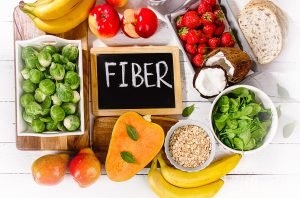
Experiencing poor digestive health or constipation? Need some help in adding more dietary fiber into your diets? Try these 6 tips to incorporate more dietary fiber into your daily regime and foods!
Legumes are a great source of fiber! Some examples of legumes include: chickpeas, kidney beans, soybeans, and peanuts. You can consider including these legumes into your daily meals, or even replacing your meat with legumes for a healthier options.
White rice refers to rice with its husk, bran and germ removed through a milling process to prolong its shelf-life, while brown rice has them intact. The husk, bran and germ in the brown rice contains nutrition such as fiber. To include more dietary fiber in your daily meals, you can start slowly changing your white rice to brown rice, and aim to have at least half of your entire portion as brown rice, if not all.
When looking out for bread or pasta, look for whole wheat or whole wheat flour in the first item of the ingredient list. Some products will have labels indicating wholegrains too! They are healthier options as compared to processed choices, which tend to have high glycemic index.
Add vegetables to your favorite meats or have fresh fruits instead of cakes and ice creams as your desserts. Moreover, fruits and vegetables are also rich in vitamins, minerals and antioxidants - additional reasons to increase your intake of these foods!
If you have a habit of snacking, pack your choices with nuts, dried fruits, wholegrain biscuits or fresh fruits, and avoid unhealthy options such as crackers, sweet candies, or chocolates.
Taking dietary fiber supplements is another way to increase your daily fiber requirement. However, do note that they should not replace your food sources of dietary fiber entirely as food sources contain a variety of other essential vitamins and minerals too. Some examples of ingredients in dietary fiber supplements include resistant maltodextrin, psyllium, wheat dextrin, inulin and methylcellulose.

Dietary fiber is well-known to be beneficial for health. But did you know that other than the effects it has on your gut health, it also has a myriad of other benefits ranging from controlling blood sugar levels and cholesterol levels? How does dietary fiber help in improving them? Read on to find out more about the 4 health benefits of dietary fiber, and start your journey to maintain a healthy lifestyle!
Perhaps the most well-known function of dietary fiber is its role it plays in maintaining good digestive health. People with optimal digestive health usually experience fewer gastrointestinal symptoms, such as constipation and/or diarrhea.
There are 2 types of dietary fiber which help improve bowel movement in different ways:
- Insoluble fiber helps to increase bulk to promote regular bowel movement. - Soluble fiber absorbs water in the intestines, which helps softens the stool for smoother bowel movements.
Satiety is the feeling of fullness after eating. Studies have also shown that taking dietary fiber is associated with a lower body weight, and managing satiety (which in return leads to a reduction in energy and calorie intake) has been touted as a possible explanation for this [1].
Dietary fiber increases the time taken for food to move from your stomach into your intestine and this keeps you feeling full for a longer time, thus possibly reducing your appetite and energy intake. In addition, food with higher dietary fiber content takes a longer time to chew, thus slowing down your food intake [2].
Some studies have shown that even a small increase in intake of dietary fiber may help improve sugar level in the blood. Dietary fiber may delay the absorption of glucose into the bloodstream from the digestive tract. Hence, reducing sudden spikes of glucose in the blood and enabling the body to manage blood sugar level more efficiently [3]. Some soluble fiber may also form gel-like substance in the stomach, which can also slow down digestion [4].
Cholesterol plays a role in bile production in the body. When dietary fiber is present in the diet, it hinders the reabsorption of bile and hence the body will be required to replace the unabsorbed bile salts. This increases the amount of cholesterol being removed from the blood for bile production [5]. Soluble fiber has been shown to be associated with a small but significant decrease in total cholesterol as well as low-density-lipoprotein (LDL) cholesterol (also often terms as the 'bad' cholesterol) [6].
What is Dietary Fiber & Why is it Important?
Gut Microbiota and Its Implications in Diabetes and Blood Sugar

- Dietary fiber is a type of complex structured carbohydrate that does not get digested and absorbed in the small intestine.
- Undigested fiber passes through the large intestine, where some are fermented by bacteria, producing metabolites such as short-chain fatty acids (SCFAs).
- Dietary fiber ca be classified into soluble fiber and insoluble fiber.
- Benefits of increasing your dietary fiber intake include satiety, regulating bowel movements, and managing blood sugar and cholesterol levels.
Dietary fiber is a type of complex structured carbohydrate that does not get digested and absorbed in the small intestine. It reaches the large intestine mostly intact where it is partially or fully fermented by gut microbes [1].
Fiber is naturally present in plants and its functional derivatives are the following:
- Cellulose - Resistant Dextrins - Hemicellulose - Oligosaccharides - Resistant Starch - Chitins - Pectins - Beta-Glucans - Lignin
Generally, most types of carbohydrates are broken down into sugar molecules by various enzymes in the human system. However, dietary fiber are not completely broken down into digestible sugar molecules in the small intestine, as humans lack the necessary enzymes to break down the chemical bonds in the fiber molecule. Undigested fiber then passes through the large intestine, where some are fermented by bacteria. The by-products of this fermentation are carbon dioxide, methane, hydrogen, and short-chain fatty acids (SCFAs). It should be noted that certain types of fiber may cause an increase in gas production which leads to bloating [2].
Fiber is classified as soluble fiber and insoluble fiber.
Soluble fiber
Soluble fiber readily dissolves in liquids. Some types of soluble fiber are viscous and will form a gel-like substance in the gastrointestinal tract during the digestion process. The other non-viscous type of soluble fibers are fermented in the large intestine to provide several physiological benefits. This type of fiber may increase the fecal stool bulk as well as soften it so that it slides easily through the large intestine.
Soluble fiber is present in corn, apples, oranges, grapes, dry beans, lentils, peas, barley, oats and the likes thereof.
Insoluble fiber
It is the type of fiber which does not readily dissolve in liquids and remains relatively unchanged in the gastrointestinal tract during the digestion process. Insoluble fiber prevents constipation by adding bulk to fecal content in the large intestine. Generally, insoluble fiber is minimally fermented. Insoluble fiber is present in vegetables, whole grain products, whole wheat bread, bran, pasta, crackers, edible seeds, brown rice and the likes thereof [3].
Adding fiber to your daily diet is imperative and has numerous benefits. It helps provide satiety without the need to consume large quantities of food. Thus, this prevents intake of excessive calories and fosters weight management.
Dietary fiber helps to regulate daily bowel movements. Soluble dietary fiber helps mainly by softening stools so that they slide easily through the large intestine, and hence reduces the frequency of constipation. It also helps increase peristaltic movements and reduces the time that waste matter remains in the colon. Also, in episodes of loose watery stools, soluble fiber absorbs the excess water and adds bulk to the stools. This contributes to the maintenance of a healthy bowel movement routine [4].
A diet rich in soluble fiber may help to manage elevated cholesterol levels in the blood. Fiber may also have a role in maintaining blood glucose level by slowing the absorption of glucose. Along with intake of high fiber diet, it is important to also increase water intake [5].
The US Dietary Guidelines recommends a daily requirement of dietary fiber of 21g to 38g, depending on calorie requirements [6].
- Dietary sources: Fiber can be naturally obtain from food sources such as fruits, vegetables, beans or wholegrain cereals. - Other sources: In addition to food sources, fiber intake can be increased from dietary supplements that contain ingredients such as resistant maltodextrin, psyllium, methylcellulose or inulin.
4 Health Benefits of Dietary Fiber
 6 Tips on Increasing Dietary Fiber Intake
 What is the Gut Microbiota?