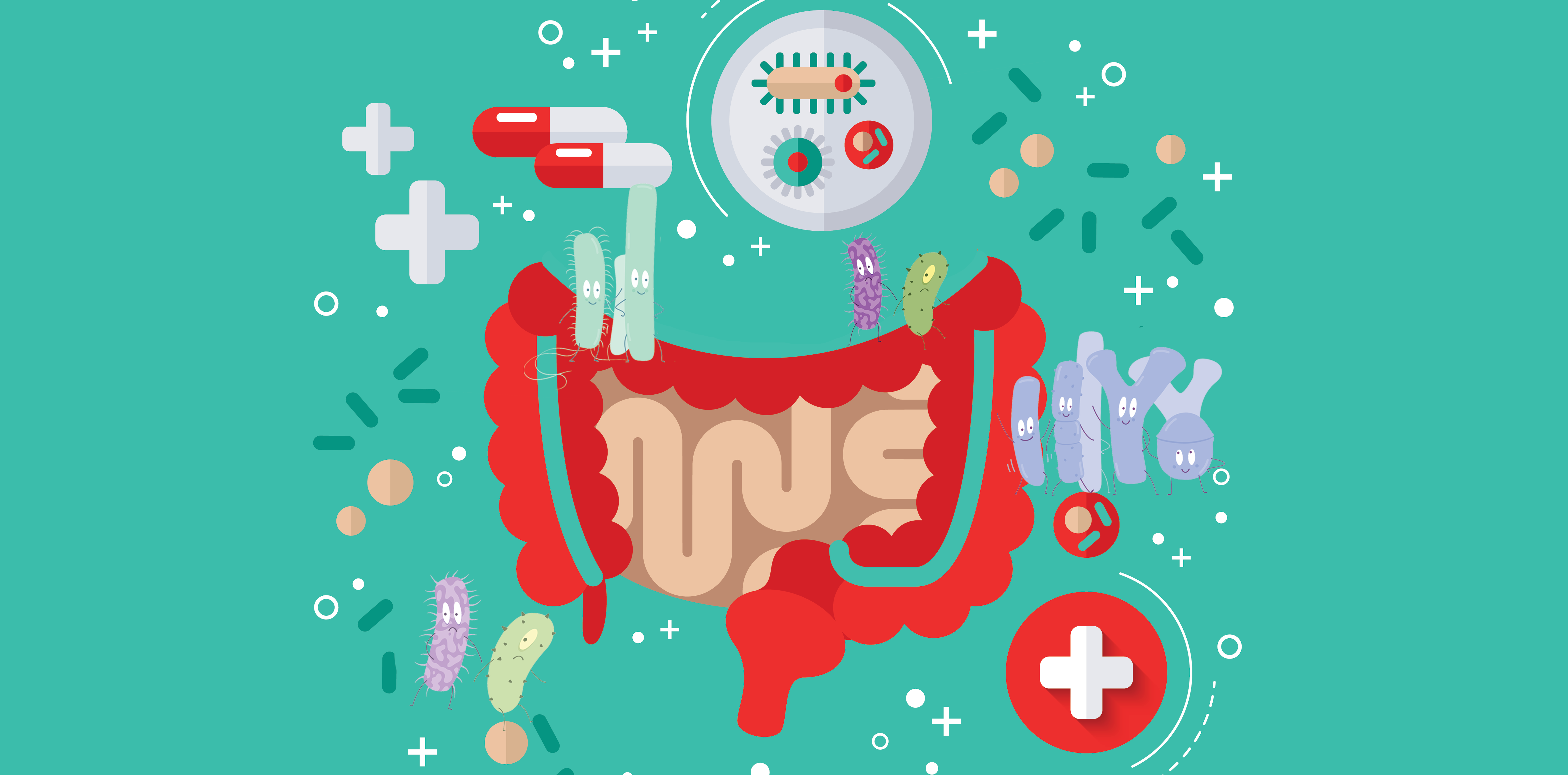
- The gut microbiota consists of microorganisms such as bacteria that resides in the gut.
- An imbalanced gut microbiota (also termed as dysbiosis) has been linked to certain diseases and disorders, many of which may even be seemingly unrelated to the gut and the gastrointestinal system.
- Health implications of an imbalanced gut microbiota include gut diseases, metabolic diseases, eczema, and neurological conditions.
- Ways to ensure a healthy gut microbiota include the use of prebiotics and reducing the intake of sugar.
The gut microbiota consists of microorganisms such as bacteria that resides in the gut. The number of cells and bacterial genetic material harbored within the human body easily outnumbers the number of human cells and genetic materials [1]. An imbalanced gut microbiota (also termed as dysbiosis) has been linked to certain diseases and disorders, many of which may even be seemingly unrelated to the gut and the gastrointestinal system. What are they, and why do they occur? What are some tips you can take to maintain a healthy gut microbiota? Read on to find out more.
1. Gut Diseases
According to a review, an imbalanced gut microbiota is associated with a whole range of gastrointestinal diseases. These diseases range from Crohn’s disease, Irritable Bowel Syndrome (IBS), celiac disease, constipation, bloating, and diarrhea [1]. Possible mechanisms could be due to the gut microbiota's roles in modulating inflammation and immunity [1].
2. Metabolic Diseases
The gut microbiota is involved in the absorption of nutrients, harvesting of energy, processing of excess carbohydrates and production of metabolites such as short-chain fatty acids (SCFAs). When the gut microbiota is unable to function optimally due to an imbalance, the risk of metabolic diseases such as diabetes and obesity increases [1].
3. Eczema
Some studies show that there is an association between low gut microbiota diversity and eczema. The gut microbiota composition of children with eczema had significantly lower beneficial bacteria diversity, specifically the Bacteroidetes phylum, when compared with children without eczema [1].
4. Neurological Conditions
It has been well established that the gut and the brain is connected via the gut-brain axis. An imbalanced gut microbiota can lead to higher levels of inflammation in the body, which may affect the central nervous system and lead to symptoms of depression and anxiety [2].
The good news is, there are ways to improve the gut flora to enhance its health. Here are 4 ways we can do to improve our gut microbiota and gut health:
1. Start intake of prebiotics
Prebiotics are substances found in certain foods that, when taken, function as nutrients to feed the gut bacteria and gut microbiota to encourage their growth and activities. Examples of food that contain prebiotics are corn, whole grains, banana, asparagus, garlic and onion. Hence, it is important to include them in your diet. Fortunately, prebiotics are available in the form of dietary fiber supplements as well [3].
2. Cut back on sugar intake
High sugar consumption has been associated with reduced levels of beneficial gut bacteria. It leads to a decrease in flora diversity and an increase in the pro-inflammatory pathogens. Hence, it is crucial to limit sugar intake especially from high glycemic sources such as soft drinks, candies and white rice [3].
3. Only take antibiotics when you need them
Antibiotics work by killing microorganisms or limiting their growth. Their effects are not only limited to pathogens but can affect the beneficial gut bacteria too. Always discuss with your healthcare professionals before taking or stopping the use of antibiotics [3].
4. Stress management
There are some ways to manage stress, such as exercising, sleeping, listening to music or playing games. You may also try meditations or yoga. Most importantly, try to get sufficient sleep of at least 8 hours of sleep every night, which may also reduce the risk of inflammatory diseases.
 Irritable Bowel Syndrome (IBS): Types, Symptoms, and Treatment
 Gut Microbiota and Its Implications in Diabetes and Blood Sugar
 Gut-Brain-Immune Axis: An Introduction

- Gut microbiota is the term used for describing the composition of microorganisms present in the gut. They include different types of microorganisms ranging from bacterial, to viral, to fungal species.
- A healthy gut comprises a set of gut microorganisms (and gut microbiota) that is largely beneficial to our health and in the meantime minimizing the species that are detrimental to us.
- Our innate set of gut microbiota is thought to be the most suitable and optimum for oneself. This optimum composition deteriorates due to several factors, leading to poorer gut health which may lead to negative health effects.
- The gut microbiota is important due to its multiple functions, including the absorption of nutrients, supporting neurological functions, and influencing metabolic processes.
The human digestive system is simple yet complex at the same time. It harbors communities of microorganisms, some of which are beneficial while others are not. Many factors contribute to the establishment of these bacteria in the gut. The food we eat is one major contributor. According to a study, about 60 tons (60,000 kg) of food passes through the gastrointestinal (GI) tract in an average lifespan [1]. An abundance of microorganisms and substrates are carried along with the food and other digested materials. These foreign microorganisms, along with the innate microorganisms found in our gut, make up the gut microbiota.
Biota is coined from the Latin word biote, meaning 'life'. Gut microbiota is the term used for describing the composition of microorganisms present in the gut. They include different types of microorganisms ranging from bacterial, to viral, to fungal species, which form symbiotic relationships with the host. Studies have shown that there are 1014 of these microorganisms present in the GI tract, making it approximately ten times more than the number of human cells in the body [2]. Due to these symbiotic relationships between the microorganisms and the human cells, the human body is considered a superorganism.
A healthy gut comprises a set of gut microorganisms (and gut microbiota) that is largely beneficial to our health (e.g., Lactobacillus and Bifidobacterium spp.), and in the meantime minimizing the species that are detrimental to us [3]. Our innate set of gut microbiota is thought to be the most suitable and optimum for oneself and it starts developing as early as when the fetus is in the mother’s womb [4]. This optimum composition deteriorates as we age. Along with poorer modern-day diets lacking in prebiotics (i.e., food for the beneficial gut bacteria) as well as increased use of medications such as antibiotics, the composition and amount of good gut bacteria decrease even faster.
This would lead to poorer gut health which may lead to negative effects such as constipation, unhealthy blood pressure [5], sugar [6] and cholesterol levels [7], as well as poor cardiovascular [8], respiratory [9] and immune health [10].
The gut microbiota has many functions in the human body, ranging from those related to the gastrointestinal system to metabolism. These roles and functions include aiding in the absorption of nutrients, controlling the population of pathogens, supporting neurological functions and influencing key metabolic processes. Here are 4 key functions of the gut microbiota:
1. Absorption of nutrients
The gut microbiota helps in the fermentation of food molecules such as prebiotic and production of some vitamins like vitamin B and K. It also influences the metabolism of nutrients due to its interactions with the epithelial receptors along the GI lining [11].
2. Controlling population of pathogens
The competitive-exclusion effect of the gut microbiome is one of the many ways it limits the growth of pathogens in the gut. The gut microbiota competes with these foreign microorganisms for nutrients and at the same time, it secretes antimicrobial compounds such as bacteriocins, which prevent the foreign microorganisms from flourishing and harming the host [11].
3. Supporting neurological functions
The digestive tract and the brain communicate with each other through a connection known as the gut-brain axis. Messages in the forms of hormonal, immunological, and neural signals travel back and forth between the central nervous system and the gut via this axis. This enables the brain to control certain GI functions such as movement of food through the digestive tract and the release of digestive enzymes. The gut microbiota produces substances such as short-chain fatty acids (SCFAs) and neurotransmitters that may affect these transmissions [11].
4. Influencing key metabolic processes
The gut microbiota can influence key metabolic processes such as insulin sensitivity, glucose tolerance, fat storage, and appetite, mainly through the regulation of gut hormones release [12].
Gut-Brain-Immune Axis: An Introduction
Gut Microbiota and Its Implications in Diabetes and Blood Sugar
