

- Chronic Obstructive Pulmonary Disease (COPD) is estimated to be the third leading cause of death worldwide.
- Our gut and lungs communicate bi-directionally via the gut-lung axis. Gut health and microbiota are involved in respiratory diseases such as COPD through this gut-lung axis.
- A healthy and balanced gut microbiota may improve our respiratory health and reduce the risk of COPD.
- The use of prebiotics to induce positive changes to our gut microbiota and improve our gut health is one option we can consider to improve our respiratory health and reduce the risk of COPD.
Chronic Obstructive Pulmonary Disease (COPD) is a term used to describe a group of respiratory diseases that cause airflow blockages and breathing difficulties. COPD is associated with chronic inflammation of the airways and includes emphysema and chronic bronchitis [1]. The World Health Organization (WHO) estimates COPD to be the third leading cause of death worldwide, causing more than 3 million deaths in 2019 alone [2]. In the United States, an estimated 16 million people are diagnosed with COPD [3].
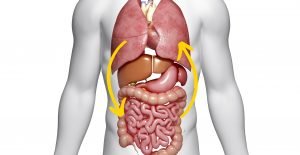
Recent studies have discovered that our gut and lungs communicate bi-directionally via the gut-lung axis. Gut health and microbiota are involved in respiratory diseases such as COPD through this gut-lung axis. Read on to find out more about how a healthy and balanced gut microbiota may improve our respiratory health and reduce the risk of COPD.
Our gut consists of trillions of such microorganisms, including bacteria, viruses, fungi and protozoa species. This set of gut microbiota is unique to everyone and varies due to several factors including environmental, lifestyle, dietary habits, and consumption of medications such as antibiotics [4].
This innate set of gut microbiota (the set that we are born with) is thought to be the most optimum for oneself. This optimum composition deteriorates as we age. Along with poorer modern-day diets lacking in prebiotics (food for the good gut bacteria) as well as increased use of medications, the composition and amount of good gut bacteria decrease even faster.
An optimum gut microbiota consists of a healthy balance of both good and bad gut bacteria species, which leads to good gut health.
Smoking is the biggest risk factor for COPD. Approximately 90% of COPD cases are caused by smoking [5]. Other risk factors for COPD include:
- Air pollution exposure - Secondhand smoke - History of childhood respiratory infections - Diet: dietary fiber intake is inversely related to COPD incidence [6]
A study published in the medical journal Gut in 2022 described the role of gut microbiota in COPD [7]. The study highlighted that dysbiosis (alteration of the gut microbiota) plays a role in influencing the pathogenesis of COPD. An increased abundance of Lachnospiraceae species in COPD patients may have contributed to chronic inflammation and worsening COPD. An increase in Lachnospiraceae species has also been observed in other chronic inflammatory diseases such as inflammatory bowel disease (IBD) [7].
The lung microbiota is known to play key roles in COPD [8]. Gut dysbiosis leads to increased gut permeability, leaking toxins and bacteria into the bloodstream which travel to the lungs, causing lung dysbiosis and possibly worsening COPD [8]. Increased gut permeability also leads to chronic systemic inflammation which worsens COPD.
For prebiotics which are dietary fibers, they also support healthy lung functions. By modifying our diets and increasing our intake of prebiotic fiber, we can potentially decrease our risk of COPD.
Prebiotics are food for our good gut bacteria. By supplementing our diets with prebiotics, we allow good gut bacteria to grow, and in turn crowd out bad ones. This establishes a healthy and balanced gut microbiota which helps support our respiratory health.
Good gut bacteria feeding on prebiotics also produce metabolites such as short-chain fatty acids (SCFAs) that confer health benefits. SCFAs are known to have anti-inflammatory effects and thus have the potential to reduce the risk of COPD [9].
The existence of the gut-lung axis suggests that improving our gut health supports our respiratory system and can potentially reduce the risk of lung diseases such as COPD. The use of prebiotics to induce positive changes to our gut microbiota and improve our gut health is one option we can consider to improve our respiratory health and reduce the risk of COPD.
 Introduction to the Gut-Lung Axis
 Prebiotic: Gut Microbiota, Gut Health, and Beyond

- In recent years, researchers have begun to uncover the association between the gut microbiota and respiratory health via the gut-lung axis.
- Our lungs, which were traditionally thought to be sterile, are estimated to contain about 103 to 105 bacteria per gram of tissue.
- The gut and lungs communicate bi-directionally via their respective sets of microbiotas and the metabolites such as short-chain fatty acids (SCFAs) which are produced when good gut bacteria feeds on prebiotics.
Our lungs and respiratory system are vital for many bodily functions. Lung diseases remain as leading causes of death worldwide [1]. More people are now taking steps to maintain a healthy respiratory system and prevent lung diseases. In recent years, researchers have begun to uncover the association between the gut microbiota and respiratory health. Read on to find out more about the gut-lung axis.
Our gut consists of trillions of such microorganisms, including bacteria, viruses, fungi and protozoa species. This set of gut microbiota is unique to everyone and varies due to several factors including environmental, lifestyle, dietary habits, and consumption of medications such as antibiotics [2].
This innate set of gut microbiota (the set that we are born with) is thought to be the most optimum for oneself. This optimum composition deteriorates as we age. Along with poorer modern-day diets lacking in prebiotics (food for the good gut bacteria) as well as increased use of medications, the composition and amount of good gut bacteria decrease even faster.
An optimum gut microbiota consists of a healthy balance of both good and bad gut bacteria species, which leads to good gut health.
Recent technological advances have discovered the presence of microbes in our lungs, which were traditionally thought to be sterile [3]. In healthy lungs, it is estimated that there are about 103 to 105 bacteria per gram of tissue. This number is much lower compared to the lower gastrointestinal tract, where there are about 1011 bacteria cells per gram of tissue [3].
The colonization of bacterial species in the lungs depends on several factors such as air inhalation, migration of microbes from the oral cavity, and local conditions in the lungs such as pH, temperature and oxygen levels [3,4]. The bacterial species that reside in the lungs are similar to those in the gut, which consists of mainly Firmicutes and Bacteroidetes [5].
Although anatomically distinct, the gut and lungs communicate bi-directionally via their respective sets of microbiotas. This communication is referred to as the gut-lung axis [4]. Just as a healthy set of gut microbiota supports our cardiovascular health [6] and immune system [7], the health of the gut also affects our lungs.
Dysbiosis refers to an alteration of the gut microbiota and is associated with many inflammatory diseases both within and outside the gastrointestinal (GI) tract. Inflammatory diseases include inflammatory bowel disease (IBD) [8] and asthma [9]. Evidence of the gut-lung axis is further demonstrated in patients with chronic GI-related diseases such as IBD: these patients also tend to have a higher prevalence of respiratory-related diseases [10].
Other evidence that the gut and lungs communicate with each other [4]:
- Gut to lung microbiota: changes to an infant’s diet have been found to alter the lung microbiota - Lung to gut microbiota: influenza infection was found to induce changes in the gut microbiota, including a decrease in Lactobacillus species, a gut microbe species known to be beneficial to humans [11]
Good gut bacteria feed on prebiotics in a process called fermentation, which produces short-chain fatty acids (SCFAs). SCFAs such as butyrate and propionate have been found to have immunomodulatory and anti-inflammatory effects in the gastrointestinal tract [12].
These SCFAs also travel from the gut to the lungs, leading to local effects on the lungs such as modulating lung immune response and anti-inflammatory effects, which can potentially play a role in respiratory inflammatory diseases such as asthma [4]. Hence, dysbiosis at the gut level may affect immune responses in the lungs.
Ever since the COVID-19 pandemic started, more emphasis has been placed on the importance of lung health and ways to proactively support our lungs. The existence of the gut-lung axis shows that improving our gut microbiota through dietary changes and supplements such as prebiotics provides an opportunity to improve our lung health and protect against respiratory diseases such as asthma and COPD.
 Gut-Brain-Immune Axis: An Introduction
Prebiotic: Gut Microbiota, Gut Health, and Beyond
 Keeping Your Gut Microbiota Healthy to Combat Long COVID and Severe COVID-19 Infection
